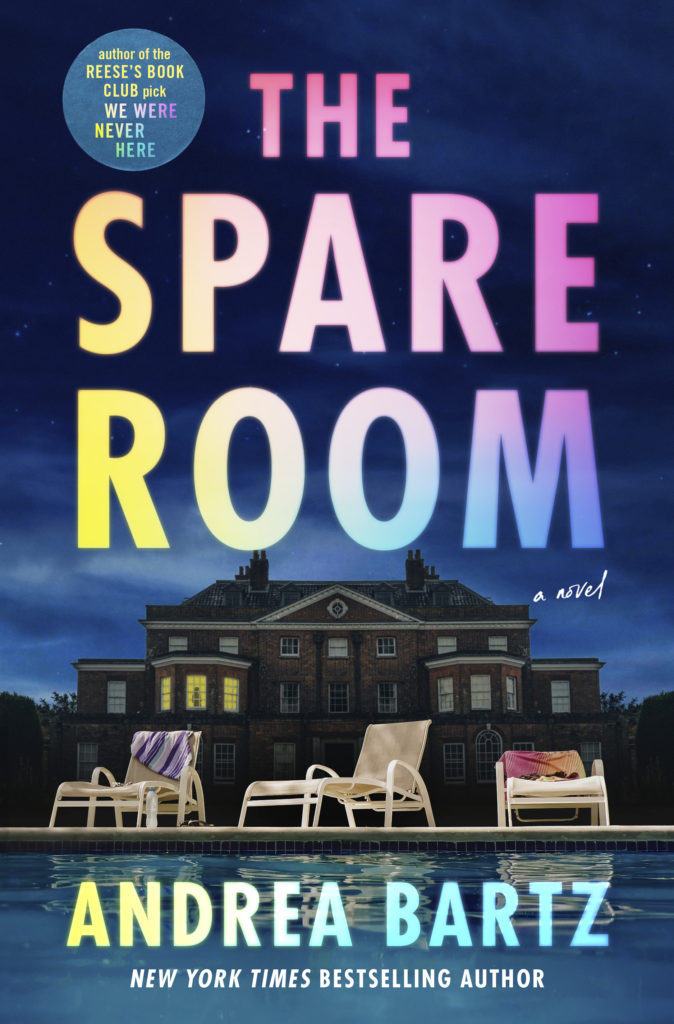


GMA Bonus Buzz Pick
Marie Claire‘s August #ReadWithMC Book Club Pick
People Magazine Best New Book
Elle “Best Book of 2023”
Marie Claire “Best Book of 2023”
Popsugar “Best New Thriller”
Betches “Best Book of the Year”
Harper’s Bazaar UK “Best Thriller of 2023”
CrimeReads “Best Crime Novel of 2023”
Glamour “Best New Summer Thriller”
Shondaland “Best Book for June 2023”
Harper’s Bazaar “Best Book of Summer”
CrimeReads “Best Psychological Thriller of June 2023”
BuzzFeed “Most Anticipated Thriller of 2023”
Goodreads “Most Anticipated Thriller of 2023”
Kelly’s new life in Philadelphia has turned into a nightmare: She’s friendless and jobless, and the lockdown has her trapped in a tiny apartment with the man she gave up everything for, who’s just called off their wedding. The only bright spot is her newly rekindled friendship with her childhood friend Sabrina—now a glamorous bestselling author with a handsome, high-powered husband.
When Sabrina and Nathan offer Kelly an escape hatch, volunteering the spare room of their remote Virginia mansion, she jumps at the chance to run away from her old life. There, she secretly finds herself falling for both her enchanting hosts—until one night, a wild and unexpected threesome leads the couple to open their marriage for her.
At first, Kelly loves being part of this risqué new world. But when she discovers the last woman they invited into their marriage is missing, she starts to wonder if they could be dangerous…and if she might be next.
Packed with Andrea Bartz’s signature tension, twists, and toxic relationships, THE SPARE ROOM marks an edgy, boundary-pushing new direction from the “master of the ‘feminist thriller’” (Los Angeles Times).
PRAISE
“Sexy, atmospheric, deliciously creepy and ingeniously plotted: the best kind of up-all-night page turner.” – Lucy Foley, #1 New York Times bestselling author of THE PARIS APARTMENT
“An enticing, twisty, and seductive thriller about obsession, desire, and revenge.” – Nita Prose, #1 New York Times bestselling author of THE MAID
“Bartz’s latest showstopper kept me up all night turning pages. Propulsive and sexy, THE SPARE ROOM left me gasping for air as I followed its main character into the fiery heart of a dark, complicated romance. Kelly Doyle must contend not only with two new lovers but her own expectations surrounding relationships and sexuality. This is one visit you won’t want to end.” – Ana Reyes, New York Times bestselling author of THE HOUSE IN THE PINES
“A fresh and sexy ride, perfect for reading poolside.” – People Magazine
“We’re entering the era of media which deeply considers the ramifications of the two-year hiatus the pandemic threw us into, and The Spare Room is among the best of them. Thrilling, juicy, glossy, and steamy all at once, Bartz, as always, nails the nuances of female friendship (We Were Never Here stans, assemble!) while keeping you turning the pages well into the evening and beyond.” – Marie Claire
“Shows [Bartz’s] knack for creating sizzling scenarios amped up with unbearable tension … and hairpin turns that readers of Bartz’s previous books have come to expect.” – Harper’s Bazaar
“Sex, sin and excess…it’s like Noel Coward and Erica Jong collaborated. One of my favorite books of the year.” – S.A. Cosby, New York Times bestselling author of RAZORBLADE TEARS, ALL THE SINNERS BLEED, and BLACKTOP WASTELAND
“Listening to THE SPARE ROOM got me through my long runs as I trained for the marathon. Lots of original twists and turns—I really enjoyed it!” – Greer Hendricks, No. 1 New York Times bestselling co-author of THE WIFE BETWEEN US, AN ANONYMOUS GIRL, YOU ARE NOT ALONE, and THE GOLDEN COUPLE
“With its dazzling prose, fascinating dynamics between characters, and dark, twisty plot, THE SPARE ROOM has all the trademarks of an Andrea Bartz novel—while being her sexiest and most exciting book yet. I couldn’t stop turning the pages; some of these scenes will be seared into my brain forever.” – Megan Collins, author of THE FAMILY PLOT, BEHIND THE RED DOOR, and THE WINTER SISTER
“Rife with tension, taut desire, and jaw-dropping twists, THE SPARE ROOM lures us into a moneyed world as gothic as it is glamorous, where the difference between romantic dreams—and murderous nightmares—quickly becomes impossible to decipher. A sensuous, spine-tingling thriller that’s impossible to put down!” – Leah Konen, author of THE PERFECT ESCAPE, YOU SHOULD HAVE TOLD ME, and ALL THE BROKEN PEOPLE
“I love a story where a woman throws convention to the wind and has to deal with messy consequences, and THE SPARE ROOM does it brilliantly. I never knew what would happen next! This book offers a delicious mix of romance and mystery that I couldn’t get enough of.” – Marie Rutkoski, New York Times bestselling author of REAL EASY
“A fantastic slow burn. This is one of those books that demands your attention. Stellar work.” – Rob Hart, author of THE PARADOX HOTEL and THE WAREHOUSE
“Bartz…brings to her writing a fierce emotional intelligence, one that is as eager to explore strange dynamics as it is to call out the red flags in them and subtly educate her readers along the way. Smart and seductive, THE SPARE ROOM is a fun, sexy summer read perfect for fans of Colleen Hoover’s VERITY or Robyn Harding’s THE SWAP.” – Book Reporter
“The best-selling author of the sensational We Were Never Here, which was also a Reese’s Book Club pick, is back with another thriller that will keep you hooked until the very end.” – Katie Couric Media
“A cleverly plotted page-turner…Bartz expertly whips up a dizzying kaleidoscope of suspicion (including two truly game-changing twists).” – Publishers Weekly
“Andrea Bartz is a master of suspense. From the very first page of her latest thriller, I was hooked, desperate to find out what would happen…I flew through The Spare Room’s short chapters (my favorite kind), propelled not only by the gripping, well-plotted storyline but by the steamy will-they, won’t-they sexual tension and several surprising twists.” – Elle
“Equal parts steamy and thrilling, it will leave you guessing about what the couple’s motives really are, and their real plans for Kelly.” – Glamour
“The novel is delightfully salacious and rampant with suspense and sex, and there’s a reason why Bartz is known as a hitmaker in the field.” – Shondaland
“Compulsive … an unapologetically sexually driven thriller set in the claustrophobic conditions of lockdown … An easy, fun summer read.” –Daily Mail
PRESS
Andrea Bartz on Coming Out as Bisexual in Her 30s and Being ‘Protective’ of Latest Novel (Exclusive) – People
‘The Spare Room’ Is Our July Book Club Pick – Marie Claire
Video: Sister Authors Informing World Through Their Books – ABC News Live (GMA Bonus Buzz Pick)
Romantic Turmoil Leads to Fixation on an Old Friend in Excerpt of Andrea Bartz’s “The Spare Room” – Popsugar
Read the Uncensored NC-17 Sex Scene That Was Too Steamy to Print in Andrea Bartz’s ‘The Spare Room’ – Cosmopolitan
Andrea Bartz’s New Gothic Thriller Mirrored Her Life in a Way She Wasn’t Expecting – Shondaland
The Best Books Published in 2023, According to ELLE Editors – Elle
The Best Books Of 2023 So You Can Avoid Talking to People – Betches
The Best Crime Novels of 2023 – CrimeReads
The 15 Best Books of 2023, as Chosen by ‘Marie Claire’ Editors – Marie Claire
Video: Sister Authors Informing World through their Books – Morning Blend
The Best Summer Books Recommended by BAZAAR Editors – Harper’s Bazaar
The Must-Read Thriller Books of Summer 2023 – Paste Magazine
9 Beach-Bag Essentials, Inspired by Reese Witherspoon, Mindy Kaling and More – People
New Thriller Books of Summer 2023 That Can Cool Off Even the Hottest Beach Day – Glamour
The Best Books for June 2023 – Shondaland
The 39 Best New Books to Read in Summer 2023 – Elle
I Soft-Launched My Bisexuality During the Pandemic – Marie Claire
57 New Mystery and Thriller Books You Won’t Be Able to Put Down – Popsugar
Hey, Betch! Your Summer 2023 Reading List Is Here – Betches
New and Upcoming Books to Discover This Pride Month – Goodreads
44 New Books for Summer Reading in 2023 – Milwaukee Journal Sentinel
The Incredible Bartz Sisters – Shondaland
In Pandemic-Fueled Thrillers, the Danger Is in the House – Washington Post
Review: The Spare Room – Book Reporter
Review: The Spare Room narrated by Brittany Pressley – AudioFile Magazine
The 10 Best Absorbing Thrillers to Read This Year – Harper’s Bazaar UK
8 Queer Thrillers That’ll Get Your Heart Racing In More Ways Than One – Scary Mommy
The Most Anticipated Crime Fiction of 2023 – CrimeReads
The 20 Most Anticipated Thrillers Of 2023 – Buzzfeed
2023’s Most Anticipated Mysteries and Thrillers – Goodreads
9 Thriller Books to Check Out in June 2023 – Storizen
11 Must-Read Books by LGBTQIA+ Authors – HerCampus
12 New Novels You Should Read This June – CrimeReads
5 Wisco-Connected Beach Reads and Where to Read Them – Milwaukee Magazine
38 New Sapphic Books Out in June 2023 – Lesbrary
The Best Psychological Thrillers of June 2023 – CrimeReads
Bestselling Bartz sisters began writing as girls in Brookfield – Milwaukee Journal Sentinel
New Releases: June 20, 2023 – LGBTQ Reads
10 New Books Coming Out This Week – CrimeReads
New Sapphic Releases: Bi and Lesbian Books Out June 20, 2023! – The Lesbrary
12 Book Club Picks of July 2023 – BookRiot
Thriller Stand-Alones: Jun. 2023, Prepub Alert – Library Journal